MyMahjong

← Back to Learn

TILES

Mahjong tiles explained

A full Hong Kong or MCR set has 144 tiles, 42 different faces. Once you can read them at a glance, the rest of the game is much easier. Here is every tile, with its name and a tip for recognising it.

The set at a glance

The tiles fall into three families: three numbered suits, the honour tiles (winds and dragons) and the bonus tiles (flowers and seasons).

FamilyFacesCopies of eachTiles
Bamboo, Dots and Characters3 suits x 9 numbers = 274108
Winds (East, South, West, North)4416
Dragons (Red, Green, White)3412
Flowers414
Seasons414
Total42144

Without the eight bonus tiles the set has 136 tiles. Hong Kong and MCR normally use 144, some Hong Kong tables (HKMA) play with 136, and American Mahjong uses 152 tiles with jokers.

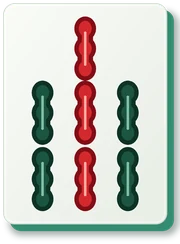
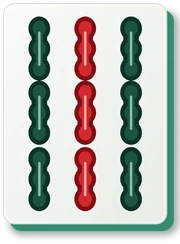
Bamboo

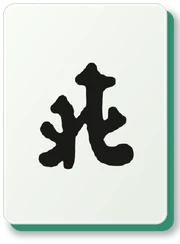
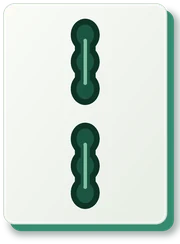
Also called sticks (Chinese 条, tiáo). The tiles show green bamboo sticks, and the number is simply how many sticks you count.
Bamboo 1一条
Bamboo 2二条
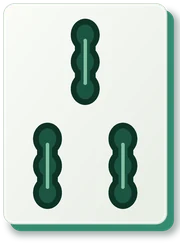
Bamboo 3三条
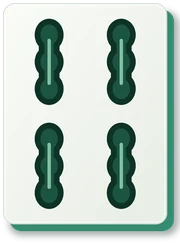
Bamboo 4四条
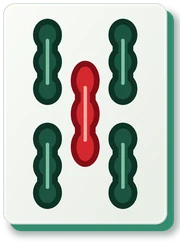
Bamboo 5五条
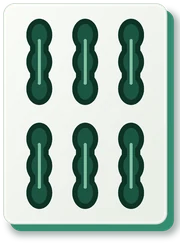
Bamboo 6六条
Bamboo 7七条
Bamboo 8八条
Bamboo 9九条

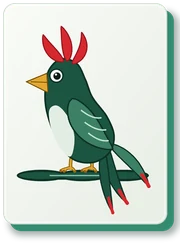
Tip: Bamboo 1 is the odd one out. It shows a bird (a sparrow), not a single stick, so it is easy to miss when you sort your hand.

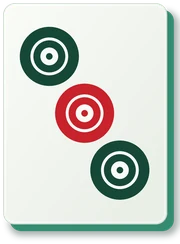
Dots (Circles)

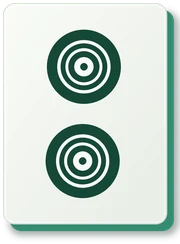
Also called coins or circles (Chinese 筒, tǒng). Count the circles to get the number. Dots 1 is one big circle.
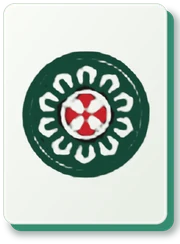
Dots 1一筒
Dots 2二筒
Dots 3三筒
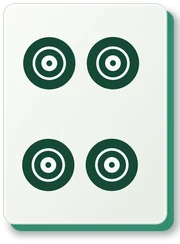
Dots 4四筒
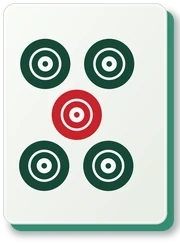
Dots 5五筒
Dots 6六筒
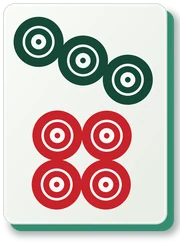
Dots 7七筒
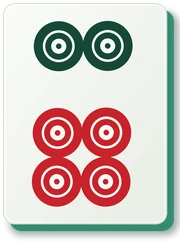
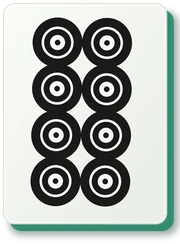
Dots 8八筒
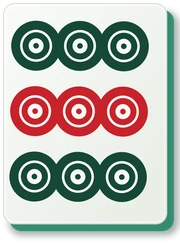
Dots 9九筒

Characters

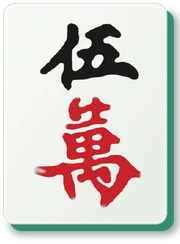
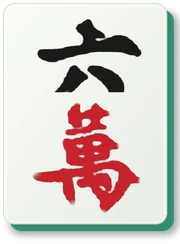
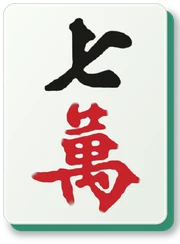
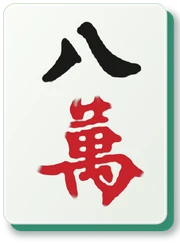
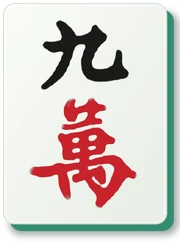
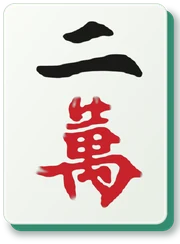
Also called wan or myriads (Chinese 万, wàn). Each tile has a Chinese number on top and the character 萬 below it. The numbers are 一 二 三 四 五 六 七 八 九 (1 to 9). Some sets write 5 as 伍, a formal form of the same number.
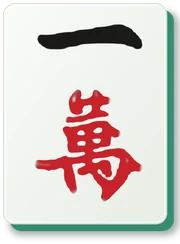
Characters 1一万
Characters 2二万
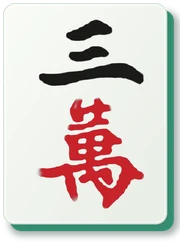
Characters 3三万
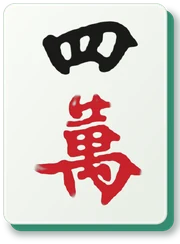
Characters 4四万
Characters 5五万
Characters 6六万
Characters 7七万
Characters 8八万
Characters 9九万

Winds

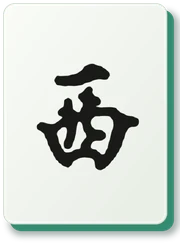
Four wind tiles, in the order East, South, West, North (the order turns come round the table). They matter twice: your seat has a wind, and each round has a wind.
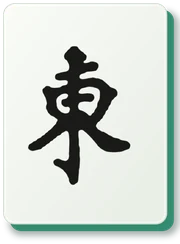
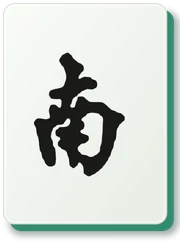
East東 dōng
South南 nán
West西 xī
North北 běi

Dragons

Three dragon tiles. They are valuable in most scoring systems, and any set of three dragons earns points.
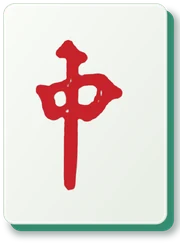
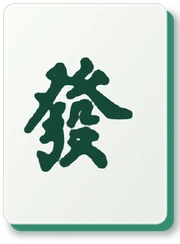
Red Dragon中 zhōng
Green Dragon發 fā
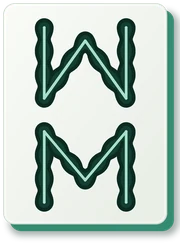
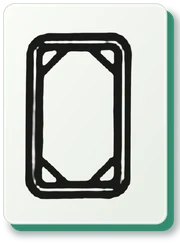
White Dragon白 bái

Tip: the White Dragon is the blank-looking tile, with only a thin frame.

Flowers and seasons

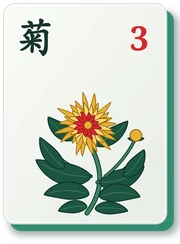
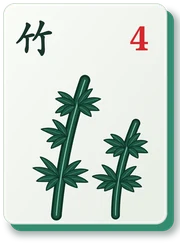
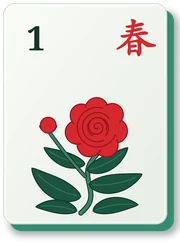
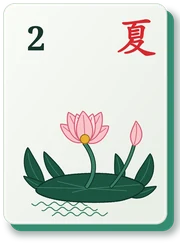
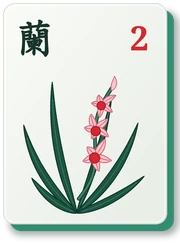
Eight bonus tiles, one of each. They are numbered 1 to 4 to match the four seat winds (East to North). You never use them to make sets: when you draw one, you show it and take a replacement tile from the back of the wall.
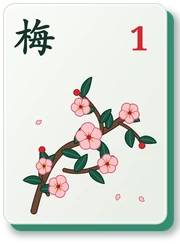
Plum (1)梅 méi
Orchid (2)蘭 lán
Chrysanthemum (3)菊 jú
Bamboo (4)竹 zhú
Spring (1)春 chūn
Summer (2)夏 xià
Autumn (3)秋 qiū
Winter (4)冬 dōng

Words you will hear

  • Simples: the numbers 2 to 8 in any suit.
  • Terminals: the 1s and 9s of the three suits.
  • Honours: winds and dragons.
  • Suit tiles: bamboo, dots and characters (the numbered tiles).
  • Chow, pung and kong: a run of three, three of a kind and four of a kind. See the basics guide.

Tips for reading your hand

  • Sort your tiles by suit, then by number. Keep honours at the end.
  • Learn the Chinese characters on winds and dragons first: only seven symbols.
  • For Bamboo, count the sticks; for Dots, count the circles; Bamboo 1 is the bird.
  • The Coach in MyMahjong names every tile in your own language, which is a good way to practise.

Keep reading

MCR

How to play MCR: a hand from setup to the last tile

A step-by-step guide to a hand of Chinese Official Mahjong (MCR): the setup, the deal, a turn, claiming discards, kongs, flowers, a drawn hand and the 16-hand match.

Read the guide →
MCR

MCR scoring explained: the 8-point minimum and how to count

How scoring works in Chinese Official Mahjong (MCR): winning structures, the eight-point minimum, the pattern tiers, avoiding double counting, payments with worked examples and the common mistakes.

Read the guide →
MCR

MCR strategy for beginners: how to reach eight points

Practical beginner strategy for Chinese Official Mahjong (MCR): plan your eight points early, learn a few patterns, combine small ones, keep sets concealed and use a checklist before you play.

Read the guide →
HONG KONG

Hong Kong Mahjong basics: the dealer, winds, flowers and faan

A beginner guide to Hong Kong Mahjong: how the dealer and winds change, taking a turn and claiming discards, kongs, flowers, the minimum faan and the basic faan items.

Read the guide →
VMC

VMC rules explained: shared faan, Classical and Modern settlement

What the Victoria Mahjong Club (VMC) Hong Kong rules cover: the shared faan list, the two point settlement models called Classical and Modern, the base-point tables and worked examples.

Read the guide →
HKMA

HKMA rules explained: 3-faan minimum, 10-faan ceiling and how it differs from VMC

What the Hong Kong Mahjong Association (HKMA) Classical Mahjong rules cover: the 3-faan minimum, the 10-faan ceiling, how faan add up, conditions to watch, and a comparison with VMC values.

Read the guide →
RIICHI

How riichi mahjong works: a beginner's guide to the Japanese rules

The basics of riichi mahjong: the 136 tiles, how a hand and a game run, calling tiles, the riichi declaration, furiten, dora and how a hand ends.

Read the guide →
RIICHI

Riichi scoring explained: han, fu, limits and payments

How a riichi hand is scored: counting han and fu, the fu table, mangan and the limits, who pays what, and the effect of continuance counters, riichi sticks and draws.

Read the guide →
RIICHI

Riichi rule options: competition rules, house rules and red fives

The main rule choices in riichi mahjong: open tan'yao, red fives, starting points, uma and oka, rounding mangan, and the optional rules groups agree before a game.

Read the guide →

Ready to try a hand?

Play against bots for free, with a Coach and a scoring guide beside you.

Play now