How riichi mahjong works
Riichi is the Japanese way of playing mahjong. It uses the same tiles and the same idea of four sets and a pair as other styles, but it adds a few ideas of its own: you need a yaku to win, you can declare riichi, and dora tiles raise the score. This page walks through a whole game.
The goal
Four players each build a hand of 13 tiles and try to complete a 14-tile winning hand: four sets and a pair. A set is a sequence of three consecutive numbers in one suit, a triplet of three identical tiles, or a kan of four identical tiles. The score depends on the yaku, the han and the fu of the hand. You will meet those words again on the yaku and scoring pages.
The key difference from other styles is that a complete hand is not enough. It must also contain at least one yaku, a scoring condition such as riichi, all simples or a dragon triplet. Dora add points but never count as a yaku.
The tiles
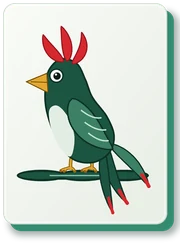
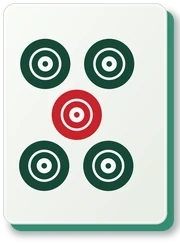
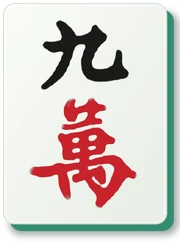
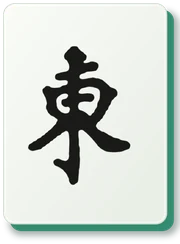
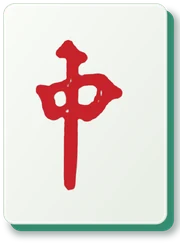
A riichi set has 136 tiles: Bamboo, Dots and Characters from 1 to 9, four copies each, plus four winds and three dragons with four copies each. There are no flowers or seasons. Some groups play with three red fives, which count as dora.
Seats and rounds
- Each player has a seat wind. East is the dealer and plays first. The winds are reassigned after every hand that the dealer does not keep.
- A game is usually a hanchan: an East round and a South round. Each round lasts until every player has been dealer once.
- Players start with 25,000 or 30,000 points, depending on the rules. Small sticks are used to pay and to keep score.
- The dealer pays and wins more than the other seats, so staying dealer is valuable.
Taking a turn
On your turn you draw one tile and then discard one. Discards go face up in front of you, in rows of six, so everyone can see what has been thrown. The tiles you hold stay hidden.
You may also call a discard from another player to complete a set. A call exposes that set and makes your hand open, which matters because some yaku need a closed hand.
- Chii: take the discard of the player on your left to make a sequence.
- Pon: take a discard from any player to make a triplet.
- Kan: make a set of four. It can be called from a discard, added to an exposed triplet, or made from four tiles in your own hand. After a kan you draw a replacement tile.
- If several players want the same tile, a win comes first, then pon and kan, then chii.
Winning
You win by tsumo, drawing the tile yourself, or by ron, taking the tile that someone else discarded. In both cases the hand must be complete and have a yaku. When you win by ron, the player who discarded pays everything.
Special shapes also win: seven pairs, and thirteen orphans, one of each terminal and honour plus a duplicate.
Riichi
When your closed hand is one tile from winning (tenpai), you may declare riichi. You say the word, discard a tile sideways and put a 1,000-point stick on the table. From then on you cannot change your hand: you draw, then either win or discard the tile you drew.
In return riichi is a yaku by itself, it can earn ippatsu if you win within a go-round, and the winner also gets ura dora, extra dora hidden under the indicators. The stick goes to the winner of the hand.
Furiten
You cannot win by ron on a tile you have already discarded, if that tile would complete your hand. This is called furiten. You are also in a temporary furiten if you pass on a winning discard, until your next draw. If you declared riichi and missed a win, you stay furiten until the end of the hand. A furiten player can still win by tsumo.
Dora
After the deal one tile on the dead wall is turned face up as the dora indicator. The dora is the next tile in order: a 3 points to 4, a 9 points back to 1, East points to South and so on, and the dragons go White, Green, Red. Each dora tile in your winning hand adds one han. Every kan reveals another indicator, and riichi winners also count the ura dora beneath.
How a hand ends
A hand ends when someone wins or when the live wall runs out. If nobody wins, players show whether they are tenpai. Players who are not tenpai pay a total of 3,000 points to those who are. The dealer stays dealer if they win or if they are tenpai at the end of a draw. Each time the dealer stays, a counter is added that raises the next payment. When another player wins, the seats rotate.
Tips for the first games
- Aim for simple yaku first: riichi, tanyao (all simples), or a dragon or wind triplet.
- Keep your hand closed when you can. Riichi, pinfu and several others need it.
- Watch what the other players discard, and be careful with tiles that look safe for you but may not be for them.
- Check furiten before you declare riichi.
Keep learning
Based on World Riichi Championship (WRC) rules. MyMahjong follows the WRC rules for its competition profile. The explanations, tables, examples and tile pictures on this site are our own. MyMahjong is independent and is not published or endorsed by the WRC.