Riichi yaku list
A riichi hand needs at least one yaku to win. This guide lists all 39 yaku of modern competition riichi, from 1 han to yakuman, with the han value when the hand is closed and when it is open, and an example for each.
How to read this list
- Closed means no tile was called for a group. A concealed kan does not open the hand.
- "Open 1" means the yaku is worth one han less when the hand is open. "Closed only" means it cannot be scored with any called group.
- Dora add han but are not yaku, so a hand with only dora cannot win.
- In the examples, groups that were called are underlined in orange and the winning tile has a gold outline.
All yaku at a glance
| Yaku | Han |
|---|---|
| Riichi | 1 han (closed only) |
| Ippatsu | 1 han (closed only) |
| Menzen tsumo | 1 han (closed only) |
| Pinfu | 1 han (closed only) |
| Iipeikou | 1 han (closed only) |
| Tanyao | 1 han |
| Yakuhai | 1 han |
| Chankan | 1 han |
| Rinshan kaihou | 1 han |
| Haitei | 1 han |
| Houtei | 1 han |
| Double riichi | 2 han (closed only) |
| Chiitoitsu | 2 han (closed only) |
| Ittsuu | 2 han (open 1) |
| Sanshoku doujun | 2 han (open 1) |
| Sanshoku doukou | 2 han |
| Toitoi | 2 han |
| San'ankou | 2 han |
| Sankantsu | 2 han |
| Chanta | 2 han (open 1) |
| Honroutou | 2 han |
| Shousangen | 2 han |
| Ryanpeikou | 3 han (closed only) |
| Hon'itsu | 3 han (open 2) |
| Junchan | 3 han (open 2) |
| Renhou | 5 han (closed only) |
| Chin'itsu | 6 han (open 5) |
| Tenhou | Yakuman |
| Chiihou | Yakuman |
| Kokushi musou | Yakuman |
| Chuuren poutou | Yakuman |
| Ryuuiisou | Yakuman |
| Suuankou | Yakuman |
| Suukantsu | Yakuman |
| Chinroutou | Yakuman |
| Tsuuiisou | Yakuman |
| Daisangen | Yakuman |
| Shousuushii | Yakuman |
| Daisuushii | Yakuman |
1 han yaku
Riichi · 1 han (closed only)
Declare riichi when your closed hand is one tile from winning, pay a 1,000-point stick, and keep playing without changing the hand.
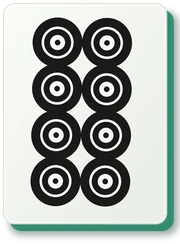
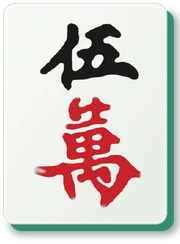
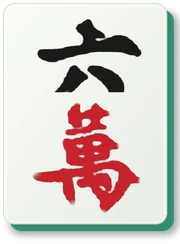
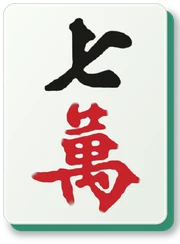
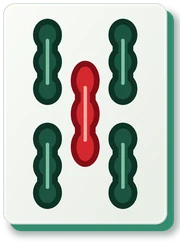
Ippatsu (one shot) · 1 han (closed only)
Win within one go-round after declaring riichi, before your own next discard, with no calls or kans in between.
Menzen tsumo (closed self-draw) · 1 han (closed only)
Win by drawing the last tile yourself while your hand has no melded groups.
Pinfu (no-points hand) · 1 han (closed only)
Four sequences and a pair that is not worth fu, won on a two-sided wait. The hand earns no extra fu at all.
Iipeikou (pure double sequence) · 1 han (closed only)
Two identical sequences in the same suit, in a closed hand.
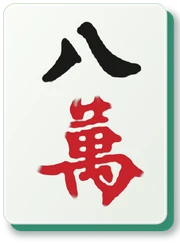
Tanyao (all simples) · 1 han
Every tile is a number from 2 to 8: no terminals and no honours. It counts on an open hand too.
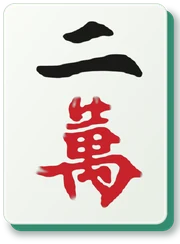
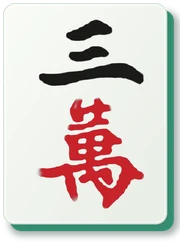
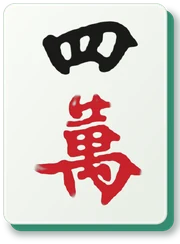
Yakuhai (value tiles) · 1 han
A triplet or kan of a dragon, of your seat wind, or of the round wind. Each one is worth 1 han, and a wind that is both seat and round wind is worth 2.
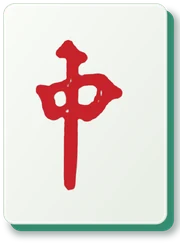
Chankan (robbing a kan) · 1 han
Win on the tile another player adds to a pung to make a kan. A concealed kan can never be robbed.
Rinshan kaihou (after a kan) · 1 han
Win on the replacement tile you draw after declaring a kan. It counts as a self-draw.
Haitei (last-tile draw) · 1 han
Win by self-draw on the very last tile of the live wall.
Houtei (last discard) · 1 han
Win on the tile discarded right after the last tile of the live wall was drawn.
2 han yaku
Double riichi · 2 han (closed only)
Declare riichi on your very first discard, with no calls before it. It replaces ordinary riichi.
Chiitoitsu (seven pairs) · 2 han (closed only)
Seven different pairs. Four of the same tile do not make two pairs. The hand is always worth 25 fu.
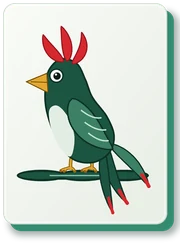
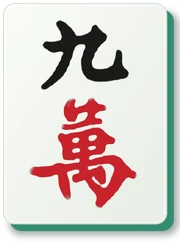
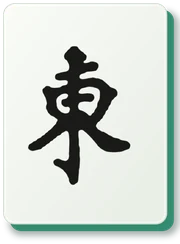
Ittsuu (pure straight) · 2 han (open 1)
The sequences 1-2-3, 4-5-6 and 7-8-9 all in one suit. One han less when open.
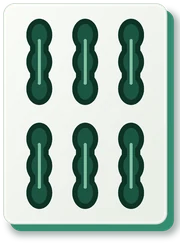
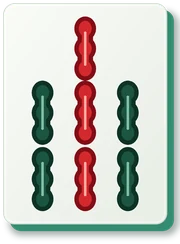
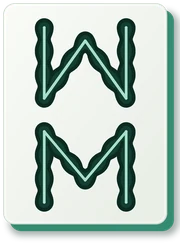
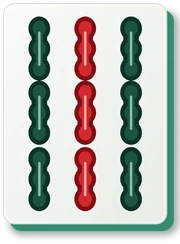
Sanshoku doujun (mixed sequences) · 2 han (open 1)
The same sequence in all three suits, for example 3-4-5 in Bamboo, Dots and Characters. One han less when open.
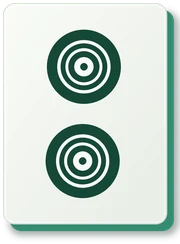
Sanshoku doukou (mixed triplets) · 2 han
The same triplet in all three suits, for example three 3s in each suit.
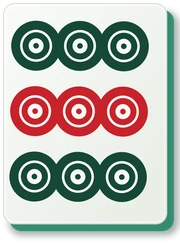
Toitoi (all triplets) · 2 han
Four triplets or kans and a pair, with no sequences.
San'ankou (three concealed triplets) · 2 han
Three triplets or kans that you made without calling a tile. A triplet finished by a winning discard counts as open.
Sankantsu (three kans) · 2 han
Three kans in one hand.
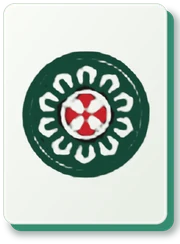
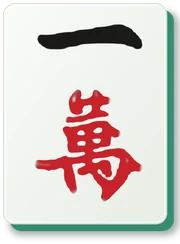
Chanta (outside hand) · 2 han (open 1)
Every group and the pair contains a terminal or an honour. It needs at least one sequence and at least one honour. One han less when open.
Honroutou (all terminals and honours) · 2 han
Only terminals and honours, with at least one of each. It always comes with all triplets or seven pairs, so it adds 2 han on top of those.
Shousangen (little three dragons) · 2 han
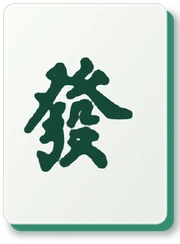
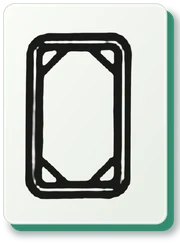
Two dragon triplets and a pair of the third dragon. The two triplets also count as yakuhai, so the hand is worth at least 4 han.
3 han yaku
Ryanpeikou (two double sequences) · 3 han (closed only)
Two pairs of identical sequences in a closed hand. It replaces iipeikou.
Hon'itsu (half flush) · 3 han (open 2)
Tiles of one suit plus honours, with at least one of each. One han less when open.
Junchan (fully outside hand) · 3 han (open 2)
Every group and the pair contains a terminal, with no honours at all. It needs at least one sequence. One han less when open.
5 han yaku
Renhou (blessing of man) · 5 han (closed only)
A non-dealer wins on a discard before their own first draw, with no calls made before. It is worth a mangan and does not combine with anything else.
6 han yaku
Chin'itsu (full flush) · 6 han (open 5)
Every tile is from one suit, with no honours. One han less when open.
Yakuman
Tenhou (blessing of heaven) · Yakuman
The dealer wins by self-draw on the opening deal.
Chiihou (blessing of earth) · Yakuman
A non-dealer wins by self-draw on their first draw, with no calls before it.
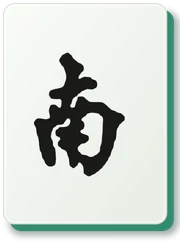
Kokushi musou (thirteen orphans) · Yakuman
One of each of the 13 terminals and honours, plus one more of any of them. A closed hand only.
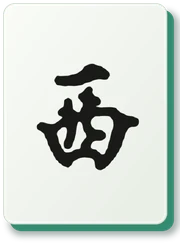
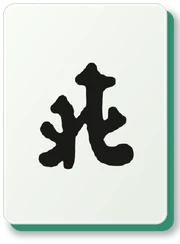
Chuuren poutou (nine gates) · Yakuman
In one suit, 1-1-1-2-3-4-5-6-7-8-9-9-9 plus any one more tile of that suit. A closed hand only.
Ryuuiisou (all green) · Yakuman
Only 2, 3, 4, 6 and 8 of Bamboo and the Green Dragon. The Green Dragon is not required.
Suuankou (four concealed triplets) · Yakuman
Four triplets or kans, all made without calling. Win by self-draw, or on a discard that completes the pair.
Suukantsu (four kans) · Yakuman
Four kans in one hand and a pair.
Chinroutou (all terminals) · Yakuman
Only terminals (1s and 9s), with no honours.
Tsuuiisou (all honours) · Yakuman
Only winds and dragons.
Daisangen (big three dragons) · Yakuman
Triplets or kans of all three dragons. Feeding the last dragon set can make you liable for the payment.
Shousuushii (little four winds) · Yakuman
Three wind triplets or kans and a pair of the fourth wind.
Daisuushii (big four winds) · Yakuman
Triplets or kans of all four winds. Feeding the last wind set can make you liable for the payment.
Keep learning
Based on World Riichi Championship (WRC) rules. MyMahjong follows the WRC rules for its competition profile. The explanations, tables, examples and tile pictures on this site are our own. MyMahjong is independent and is not published or endorsed by the WRC.