MyMahjong

← Back to the pattern guide

MCR PATTERNS

MCR patterns worth 64 points

The second tier. Four of the six are built from honours and terminals (Little Four Winds, Little Three Dragons, All Honors and All Terminals); the others come from concealed pungs or one very particular set of chows.

About this tier

They are demanding but a little more reachable than the 88-point hands, especially the honour-based ones.

How to read the examples: sets that were called from a discard (exposed) are underlined in orange, and the winning tile has a gold outline. Every example is a complete winning hand that has been checked against the scoring engine.

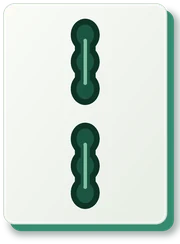
All Terminals (清幺九) · 64 points

Every set and the pair are made of terminals (1 or 9), with no honors.
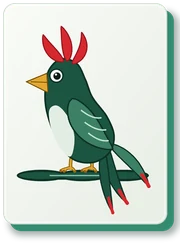
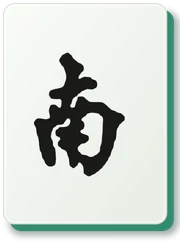
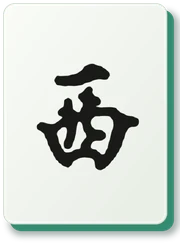
Little Four Winds (小四喜) · 64 points

Pungs of three winds and the pair is the fourth wind.
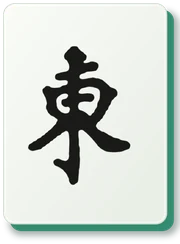
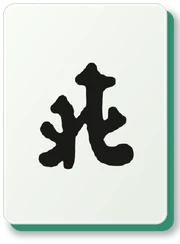
Little Three Dragons (小三元) · 64 points

Pungs of two dragons and the pair is the third dragon.
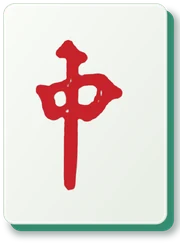
All Honors (字一色) · 64 points

Every tile is an honor (winds and dragons).

Four Concealed Pungs (四暗刻) · 64 points

Four concealed pungs (concealed kongs count). If you win on a discard, the last pung counts as melded.
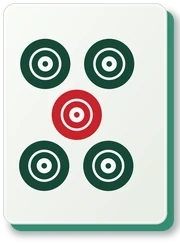
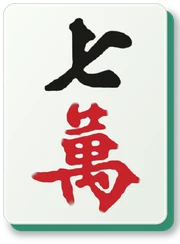
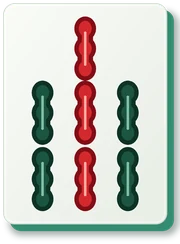
Pure Terminal Chows (一色雙龍會) · 64 points

One suit: two 1-2-3 chows, two 7-8-9 chows, and a pair of 5s.
More patterns

Keep reading

MCR

How to play MCR: a hand from setup to the last tile

A step-by-step guide to a hand of Chinese Official Mahjong (MCR): the setup, the deal, a turn, claiming discards, kongs, flowers, a drawn hand and the 16-hand match.

Read the guide →
MCR

MCR scoring explained: the 8-point minimum and how to count

How scoring works in Chinese Official Mahjong (MCR): winning structures, the eight-point minimum, the pattern tiers, avoiding double counting, payments with worked examples and the common mistakes.

Read the guide →
MCR

MCR strategy for beginners: how to reach eight points

Practical beginner strategy for Chinese Official Mahjong (MCR): plan your eight points early, learn a few patterns, combine small ones, keep sets concealed and use a checklist before you play.

Read the guide →
HONG KONG

Hong Kong Mahjong basics: the dealer, winds, flowers and faan

A beginner guide to Hong Kong Mahjong: how the dealer and winds change, taking a turn and claiming discards, kongs, flowers, the minimum faan and the basic faan items.

Read the guide →
VMC

VMC rules explained: shared faan, Classical and Modern settlement

What the Victoria Mahjong Club (VMC) Hong Kong rules cover: the shared faan list, the two point settlement models called Classical and Modern, the base-point tables and worked examples.

Read the guide →
HKMA

HKMA rules explained: 3-faan minimum, 10-faan ceiling and how it differs from VMC

What the Hong Kong Mahjong Association (HKMA) Classical Mahjong rules cover: the 3-faan minimum, the 10-faan ceiling, how faan add up, conditions to watch, and a comparison with VMC values.

Read the guide →
RIICHI

How riichi mahjong works: a beginner's guide to the Japanese rules

The basics of riichi mahjong: the 136 tiles, how a hand and a game run, calling tiles, the riichi declaration, furiten, dora and how a hand ends.

Read the guide →
RIICHI

Riichi scoring explained: han, fu, limits and payments

How a riichi hand is scored: counting han and fu, the fu table, mangan and the limits, who pays what, and the effect of continuance counters, riichi sticks and draws.

Read the guide →
RIICHI

Riichi rule options: competition rules, house rules and red fives

The main rule choices in riichi mahjong: open tan'yao, red fives, starting points, uma and oka, rounding mangan, and the optional rules groups agree before a game.

Read the guide →

Ready to try a hand?

Play against bots for free, with a Coach and a scoring guide beside you.

Play now